

Theun Hinboun Power Company, Vientiane, Lao PDR
Project Name: Theun Hinboun Intake Hydraulic Model Study: Forebay Numerical Model
DSI conducted a numerical hydrodynamic modeling study to support intake design modifications for the existing dam and intake works on the Nam Theun River in Bolikhamxai Province, Lao PDR. This effort was part of the Theun-Hinboun Expansion Project (THXP), led by Theun-Hinboun Power Company, Ltd. (THPC). The dam impounds a run-of-river reservoir known as the Headpond, which plays a central role in regional hydropower generation.
The primary objectives of the study were to support the design and evaluation of intake modifications for the THXP. This required ensuring the hydraulic compatibility between the proposed intake layouts and existing infrastructure. It was further required to provide accurate modeling data to inform design decisions and optimize flow performance.
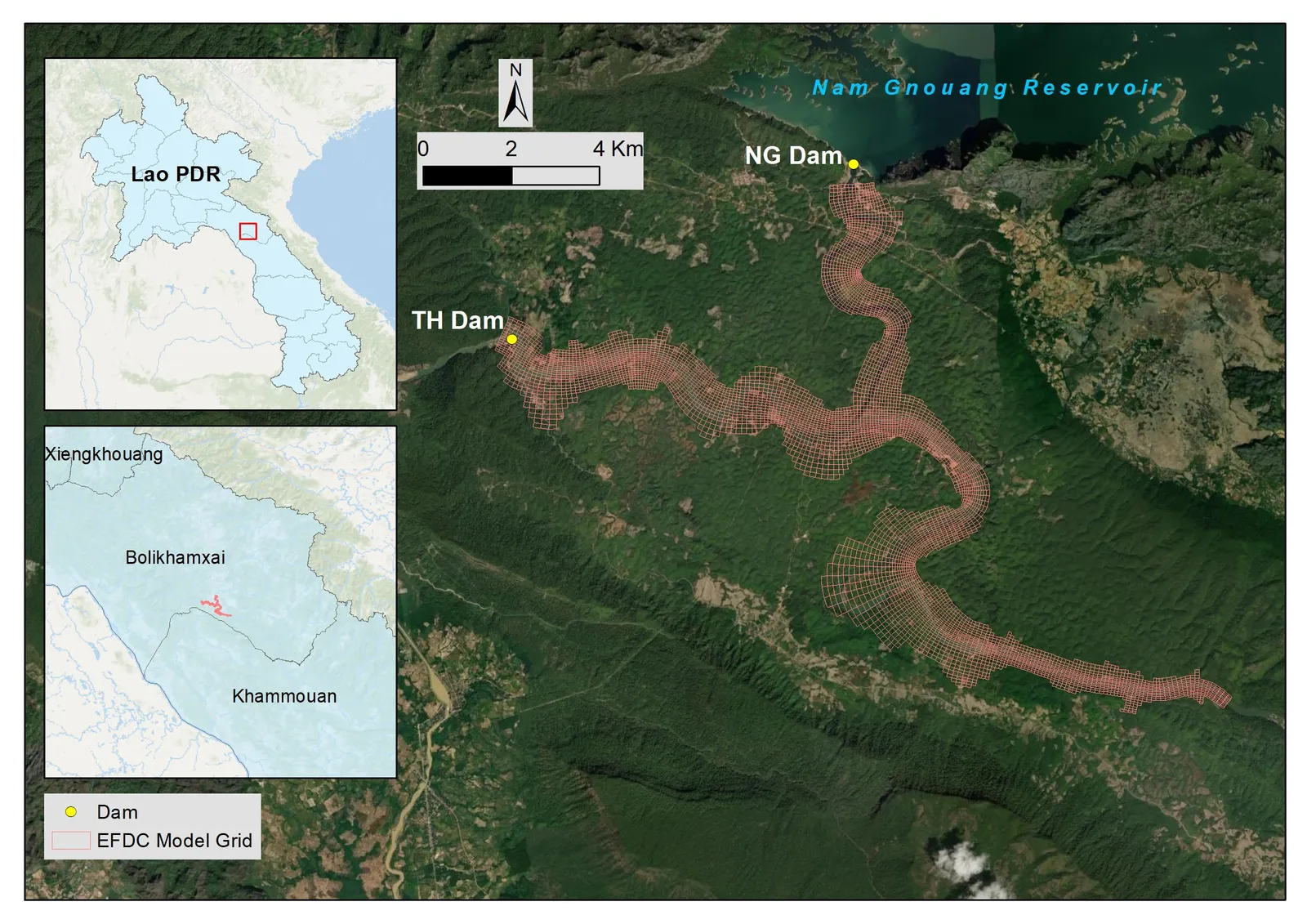 Theun Hinboun Intake Hydraulic Model Study, Bolikhamxai Province, Lao PDR.
To support the intake design modifications for the THXP Project, DSI calibrated the EFDC hydrodynamic model to a physical model of the original dam design. The numerical model demonstrated strong alignment with the physical model, with depth-averaged velocity results within 2% accuracy. The design process explored multiple layout alternatives for the expansion intakes on the Headpond, all of which retained the existing intake configuration. Proposed modifications involved retrofitting the current THPC weir and adapting one or more of the existing gates to accommodate the new intake structures. After evaluating various design scenarios, DSI provided recommendations identifying the most effective alternative, supported by comparative analysis and modeling outputs.
DSI submitted the final model and report to the client in 2007.